


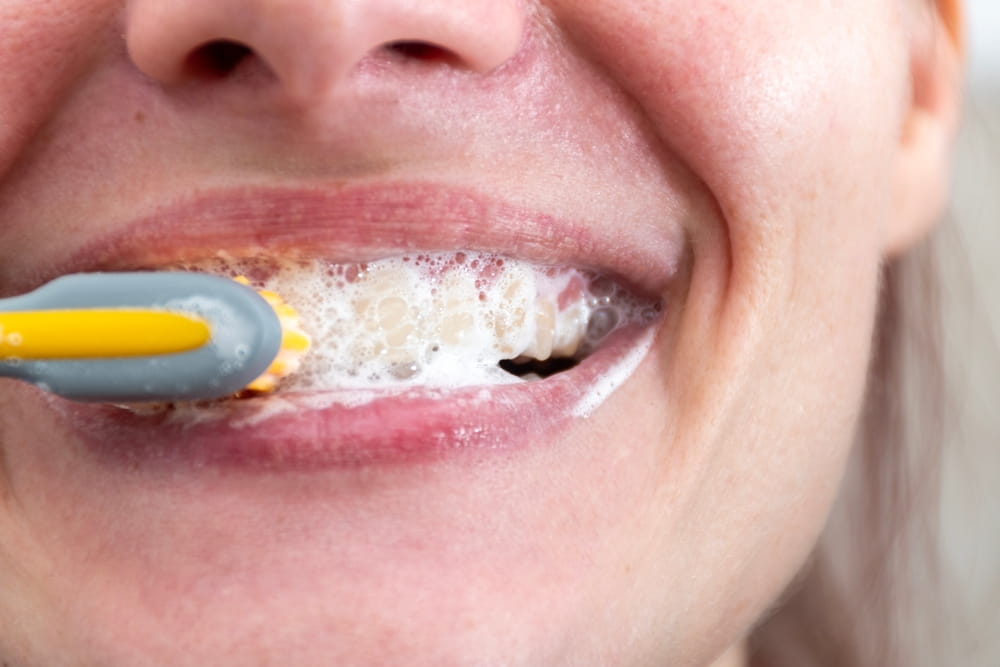
You brush your teeth twice a day, you sometimes floss, and yet your dentist still talks about plaque or sensitive gums? It’s more common than you think. Good dental hygiene isn’t just about the time you spend on it, but also about how you do it. Here are five dental hygiene mistakes that often go unnoticed. Your dental team in LaSalle explains how to correct them without completely changing your routine.
Mistake 1: Brushing Too Hard, Thinking It Cleans Better
Many people press down on their toothbrush as if they were scrubbing a sink. The result: enamel wears down over time and gums recede, which can make teeth sensitive to hot and cold.
The correct brushing technique is gentle. Angle the brush at approximately 45 degrees towards the gum line and make small circular motions. A soft-bristled or extra-soft brush, whether manual or electric, is recommended in all cases to prevent overly stiff bristles from damaging the enamel or gum tissue.
Mistake 2: Skipping flossing “because it bleeds”
It’s often the opposite of what you might think: if your gums bleed when you floss, it’s generally a sign that they are inflamed, not that you should stop. The brush alone doesn’t clean the spaces between the teeth: a significant portion of the tooth surfaces remains unreachable.
By flossing daily for a week or two, most people see the bleeding decrease. If nothing changes, it’s best to consult a dentist, as this is a sign that gum disease is developing.
Mistake 3: Rinsing your mouth immediately after brushing
It’s a nearly universal reflex: we brush, we spit, we rinse thoroughly with water. The problem is that we also rinse away the fluoride from the toothpaste, which helps remineralize enamel and protect teeth against cavities.
What should you do instead?
Spit out the excess toothpaste without rinsing excessively. If you insist on rinsing, wait at least 30 minutes.
Mistake 4: Brushing immediately after eating
When you’ve just finished a meal or a snack, the oral environment is often highly acidic due to the food and drinks you’ve consumed. However, the action of saliva in the minutes that follow helps to partially neutralize the acids in your mouth. Over time, the pH in the mouth naturally returns to a level more favorable for teeth.
However, if you brush your teeth immediately after eating, the acidity in your mouth softens tooth enamel. Combined with the action of the toothbrush, this can accelerate the mechanical wear of enamel, the protective layer of your teeth.
The advice? Wait about 30 minutes after eating before brushing. This allows time for saliva to reduce the acidity level in your mouth.
Mistake 5: Keeping your toothbrush too long
A toothbrush with splayed or crushed bristles cleans much less effectively. What’s more, it can even irritate your gums. The general recommendation is to replace it approximately every three months, or sooner if the bristles are visibly damaged.
The same applies after the flu or a cold: changing your toothbrush prevents reintroducing germs into your mouth during the recovery period.
And what about a visit to the dentist?
Even with an impeccable home routine, some areas remain difficult to clean, and tartar doesn’t come off with brushing alone. Regular checkups and cleanings allow for the early detection of minor problems, such as developing cavities or gingivitis, before they become more complex to treat.
It’s also a good time to have your brushing technique, the toothbrush you use, and other related issues assessed.
To discuss your oral hygiene habits, make an appointment at Centre Dentaire Georges. A personalized evaluation is often better than a wealth of advice gleaned online.