


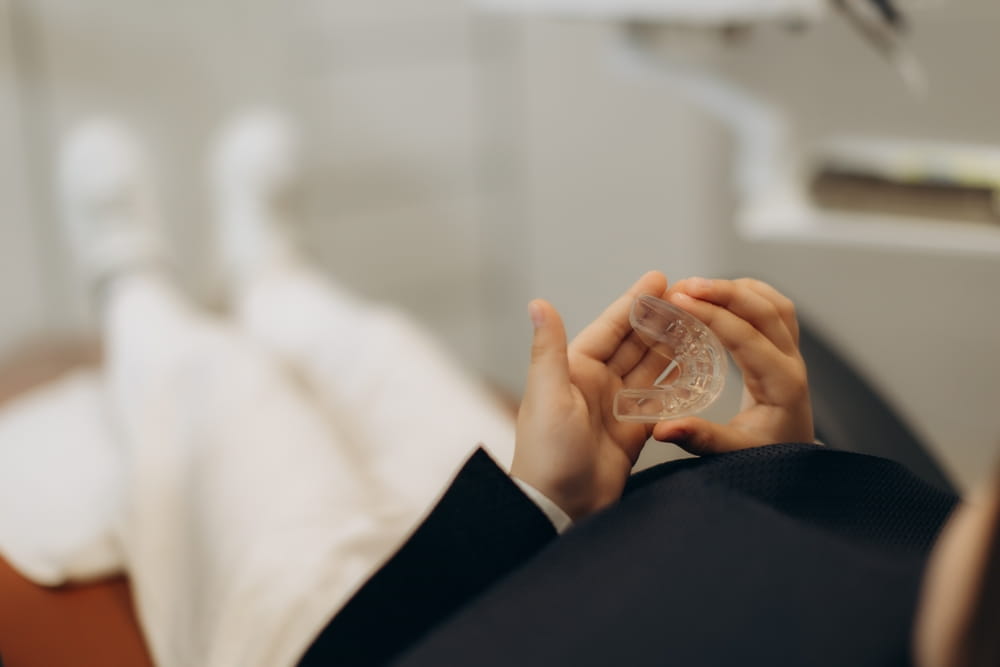
Do you wake up with a tense jaw, a dull headache, or a sensitive tooth for no apparent reason? Daily stress often affects the jaw, sometimes without us even realizing it. The link between bruxism and occlusal splints is a key question we are frequently asked. Here are the answers to the most common ones.
What exactly is bruxism?
Bruxism is the involuntary clenching or grinding of teeth. It occurs mainly at night, but can also happen during the day, often without us noticing.
The causes are numerous: stress, anxiety, sleep disorders, misaligned teeth, caffeine or alcohol consumption… In many adults, it is a combination of these factors that triggers the condition.
What signs should you watch for?
Bruxism leaves its mark, even when you don’t remember grinding your teeth.
Here are the most common signs:
- Stiff or painful jaw upon waking;
- Headaches in the temples, especially in the morning;
- Worn, flattened, or cracked teeth;
- Tooth sensitivity to hot, cold, or pressure;
- Ear pain without infection;
- Partner who hears a grinding noise at night.
If several of these signs sound familiar, a dental evaluation can confirm the diagnosis, notably by measuring the signs of wear on your teeth.
What is an occlusal splint or Night Guard?
An occlusal splint is a removable appliance worn during sleep. It is a mouthguard made of durable plastic that is placed over the upper or lower teeth, depending on the case.
Its role: to absorb the forces of clenching and grinding to protect teeth and relieve jaw pain. It doesn’t cure bruxism, but it prevents damage.
Over the counter or custom-made splint?
Occlusal splints sold in pharmacies are less expensive, but they aren’t custom fitted to your mouth. As a result, they can shift, be uncomfortable, and sometimes even worsen muscle tension.
A custom-made occlusal splint, created in a dental office, is molded from precise impressions of your teeth. It stays in place better, wears out less quickly, and provides more effective protection.
How to choose the right dental splint?
The choice depends on several factors: the severity of bruxism, existing wear, tooth alignment, presence of jaw pain, etc.
An examination helps determine the most appropriate type of splint and its thickness. A poorly chosen splint can be ineffective, or even uncomfortable, to the point of being abandoned after just a few nights of use.
How long do you wear an occlusal splint?
As long as bruxism is present, the splint remains useful. Some people wear it for a few months, until the stress subsides; others use it for years, or even for their entire lives.
It requires little maintenance: rinsing with warm water in the morning, gentle brushing, and storing it in its ventilated case. A periodic evaluation, usually performed during routine checkups, allows us to verify its fit and condition.
Bruxism is not inevitable, but if left untreated, it can be costly in terms of damage, restorative treatments, chronic pain, etc. A well-chosen occlusal splint makes a real difference to sleep quality and dental health. To discuss your situation with your dentist in LaSalle, make an appointment at Centre Dentaire Georges.