


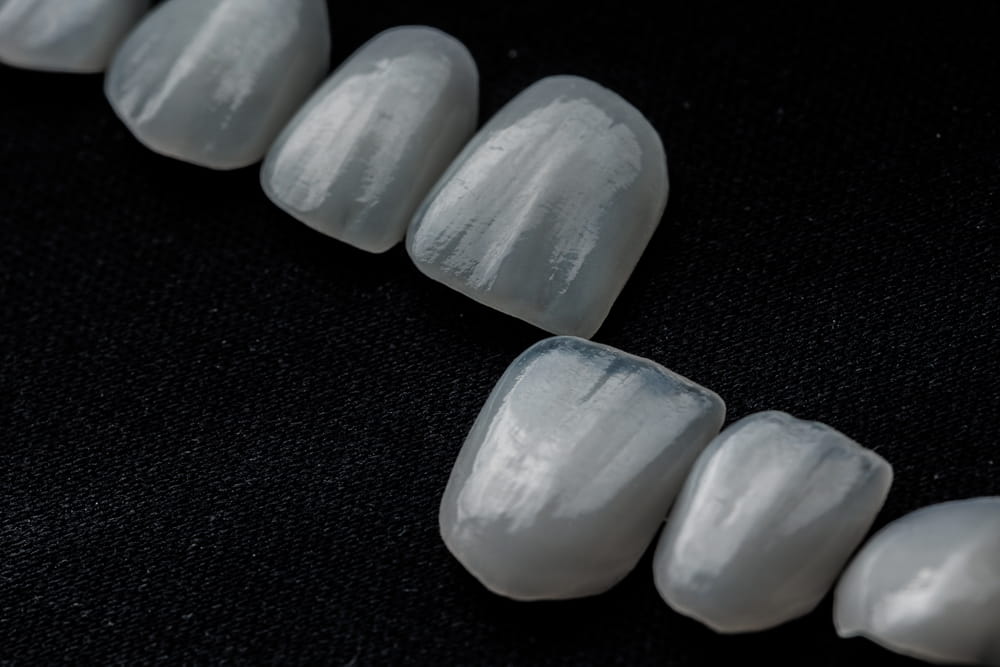
Dental veneers are an increasingly popular cosmetic solution for improving the appearance of a smile. Thin shells bonded to the visible surface of the teeth; they allow for the correction of various imperfections while preserving much of the natural structure. Before undergoing such treatment, however, it is important to understand when veneers are indicated, why porcelain is often preferred, and what conditions must be met to ensure the longevity of the result.
When are dental veneers used?
Veneers are primarily used to correct aesthetic imperfections. They are suitable for patients who wish to harmonize their smile without necessarily resorting to more complex treatments.
Veneers can be considered in the following situations:
- Stained or discolored teeth that do not respond well to whitening.
- Slightly misaligned teeth or teeth with minor rotations.
- Chipped, cracked, or worn teeth.
- Irregular or asymmetrical tooth shape.
- Gaps between teeth (diastemas) that need to be filled aesthetically.
- Teeth that are too short or uneven, affecting the balance of the smile.
Veneers allow you to modify the color, shape, length, and sometimes the appearance of the tooth alignment. The goal is to achieve a natural result that is proportionate to the facial features, considering the patient’s expectations.
Porcelain veneers: a natural and long-lasting solution
There are different types of veneers, but porcelain veneers are often preferred for their aesthetic qualities and longevity.
The main advantages of porcelain veneers are:
- Very natural appearance thanks to the translucency of the material, which mimics that of enamel.
- Increased resistance to stains caused by coffee, tea, red wine, or tobacco.
- Excellent durability, lasting 10 to 15 years or more with proper care.
- Long-lasting color stability.
- Custom design to match the shade, shape, and proportions of your smile.
Porcelain allows for a harmonious and luminous result, without any artificial appearance. Each veneer is custom-made in a laboratory, using precise impressions, to ensure optimal integration with your natural teeth.
What conditions must be met before veneers are placed?
The placement of veneers requires a complete evaluation of your dental health. Certain conditions must be met to guarantee the success of the treatment and the longevity of the restorations.
Before considering veneers, it is important to ensure:
- The absence of cavities: any lesions must be treated beforehand.
- Good gum health: gingival and periodontal diseases must be stabilized.
- Good daily oral hygiene is essential: veneers do not protect teeth against cavities.
- No uncontrolled bruxism is necessary: teeth grinding can seriously damage veneers.
Bruxism, which is the involuntary grinding or clenching of teeth, can put excessive pressure on veneers. In some cases, wearing a night guard may be recommended to protect natural teeth and restorations, including veneers.
A consultation allows us to assess the condition of your teeth, your bite, your habits, and your aesthetic goals. The dentist can then determine if veneers are the appropriate solution or if other options should be considered.
To find out if dental veneers are right for you and to discuss your aesthetic goals, a personalized consultation with the team at Centre Dentaire Georges will allow us to explore the options best suited to your smile.