


We often think of cavities when discussing oral health, but another, more subtle condition can cause significant damage: periodontitis. This gum disease develops slowly and can go unnoticed… until it leads to serious consequences.
Understanding periodontitis better is a step towards prevention and protecting your smile.
How does periodontitis develop?
Periodontitis doesn’t appear overnight. It usually begins with gingivitis, an inflammation of the gums caused by the accumulation of dental plaque.
Plaque is a film of bacteria that forms naturally on teeth. When it is not effectively removed by brushing and flossing, it hardens and turns into tartar. This tartar promotes the proliferation of bacteria under the gum line.
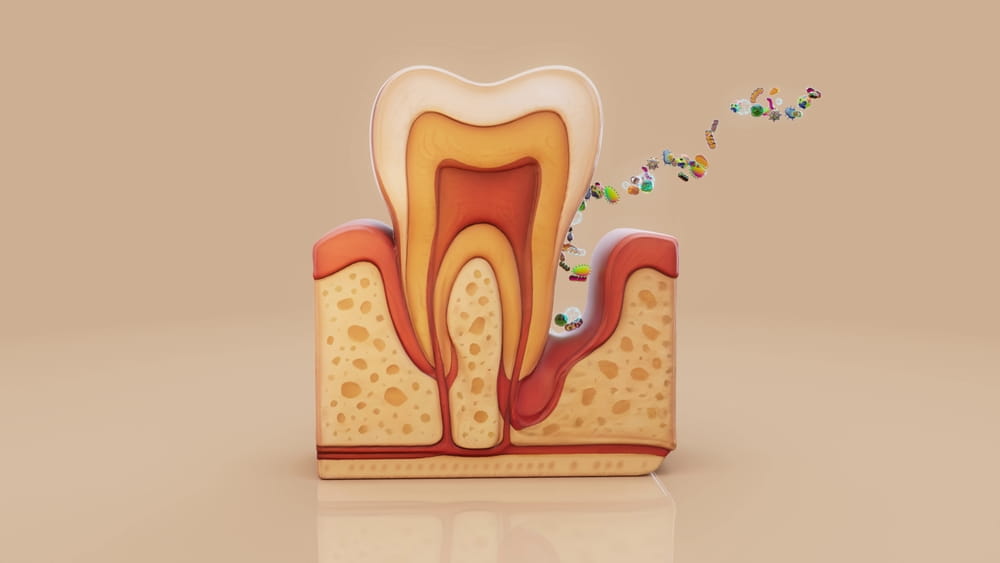
These bacteria are not harmless: they release harmful toxins that irritate tissues and trigger an inflammatory reaction. Over time, this chronic inflammation leads to the progressive deterioration of the periodontium, that is, all the structures that support the teeth (gums, periodontal ligament, and alveolar bone).
The gums then begin to detach from the teeth, forming periodontal pockets where bacteria accumulate even more. Without intervention, the situation worsens and progresses to periodontitis.
What are the signs and symptoms to watch for?
Periodontitis can develop subtly, especially in its early stages. However, certain signs can indicate a problem:
- Red, swollen, or sensitive gums.
- Bleeding when brushing or flossing.
- Persistent bad breath.
- Unpleasant taste in the mouth.
- Gradual gum recession. These symptoms are often associated with gingivitis or an early stage of the disease. They should not be ignored, as prompt intervention can prevent progression.
What are the consequences of periodontitis?
When periodontitis progresses, it is no longer limited to simple gum inflammation. It leads to deeper and often irreversible damage.
Among the main consequences are:
- Progressive destruction of the bone supporting the teeth.
- Formation of deeper periodontal pockets.
- Significant gum recession (teeth appearing longer).
- Tooth mobility.
- Tooth loss in advanced cases.
Periodontitis can also affect quality of life: difficulty chewing, discomfort, aesthetic impact, and sometimes even repercussions on overall health.
How can periodontitis be prevented?
The good news is that periodontitis can often be prevented with simple, regular habits.
Maintain rigorous oral hygiene.
Brushing your teeth at least twice a day, combined with flossing, helps remove plaque before it hardens into tartar.
See your dentist regularly.
Professional checkups and cleanings remove tartar and detect early signs of gum disease.
Don’t ignore warning signs.
Bleeding gums or persistent bad breath are not normal and warrant evaluation.
Adopt healthy lifestyle habits.
Smoking, certain medical conditions (such as diabetes), and stress can increase the risk of periodontitis.
Key points:
- Periodontitis is a more advanced stage of gingivitis.
- It causes irreversible damage to periodontal tissues and compromises tooth support.
- Regular checkups at the clinic are the best way to detect gum disease early and prevent it from progressing.
If you have any doubts or concerns, remember that your dentist at Centre Dentaire Georges in LaSalle can see you for a consultation. They can assess your condition, so you have a clear picture of your gum health.