


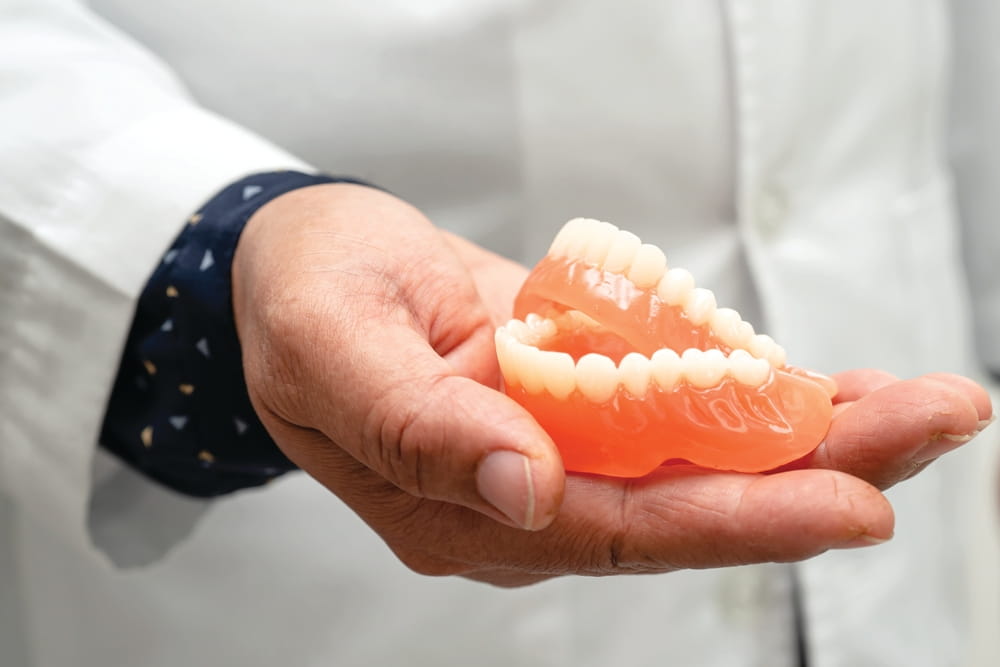
Are you missing several teeth? Are you torn between removable dentures and a fixed solution? You might be wondering which is more comfortable, which offers better stability, and what kind of daily care is required. These are perfectly normal questions. From a distance, the options may look similar, but they function differently. Here is a simple comparison of how they differ.
Types of removable dentures
A denture is considered « removable » if the appliance can be taken out of the mouth for cleaning. There are two main categories:
A complete denture replaces all the teeth in a jaw. It rests directly on the gums and stays in place via suction, sometimes with the help of an adhesive.
A partial denture replaces only a few teeth. It attaches to the remaining natural teeth using clasps or discreet fasteners. The base can be made of acrylic—which is easier to modify—or metal, which is thinner and often better tolerated.
In both cases, the appliance is custom-made from impressions of your mouth and then adjusted over the course of a few appointments.
Removable, fixed, or stabilized: comparing the options
A fixed solution, such as a bridge or an implant-supported crown, is screwed or cemented into place. You never remove it. However, it requires solid anchor points: either healthy adjacent teeth or sufficient bone to support implants.
Removable dentures do not require this type of anchoring. They are suitable for a wider range of situations, and the procedure is less invasive. On the downside, they tend to move more and are more noticeable during the initial adjustment period.
Implant-stabilized dentures
Falling somewhere in between is the stabilized denture. This is a removable appliance that snaps onto two, four, or six implants placed in the jaw. It stays in place better than a conventional denture while remaining easy to clean. This option requires an assessment of the quality of the available jawbone.
Daily comfort: what to expect?
The first few weeks require patience. Saliva production increases, some sounds may be difficult to pronounce, and biting into firm food can feel surprising. Your mouth will gradually adjust.
A few changes in habit can help, start with soft food cut into small pieces, chew on both sides simultaneously, and read aloud to retrain your tongue.
A denture should not cause pain. Sore spots or rubbing can be fixed during an adjustment appointment; it is not something you have to endure. The jaw also changes over time; a denture that fits well three years ago might need relining—adding material to the underside so it once again conforms to the shape of the dental ridge. The jaw’s structure changes when multiple teeth are missing because the alveolar bone gradually loses volume.
This issue can be avoided with an implant-supported denture, as the artificial roots provide continuous bone stimulation.
Caring for a removable denture
Remove and rinse the appliance after meals. Brush it daily using a denture brush and a suitable cleaning product; regular toothpaste is abrasive and can scratch the surface.
Also, clean your gums, palate, and tongue with a soft-bristled brush. This helps minimize irritation and unpleasant odors.
At night, most dentures should be stored in a container of cold water or a soaking solution. This is essential to allow the oral tissues to breathe. When soaking, avoid hot water, as it can warp the acrylic.
Finally, an annual check-up allows for an assessment of the adaptation, the condition of your gums, and the wear on the appliance.
Make an informed choice—talk to your dentist.
The right choice depends on the number of teeth to be replaced, the condition of your gums and bone, your dietary habits, and the adjustment period you are willing to commit to. A clinical examination and X-rays allow for a comparison of the options suitable for your specific case. To discuss your situation and dental prosthetics in LaSalle, schedule an appointment at Centre Dentaire Georges.